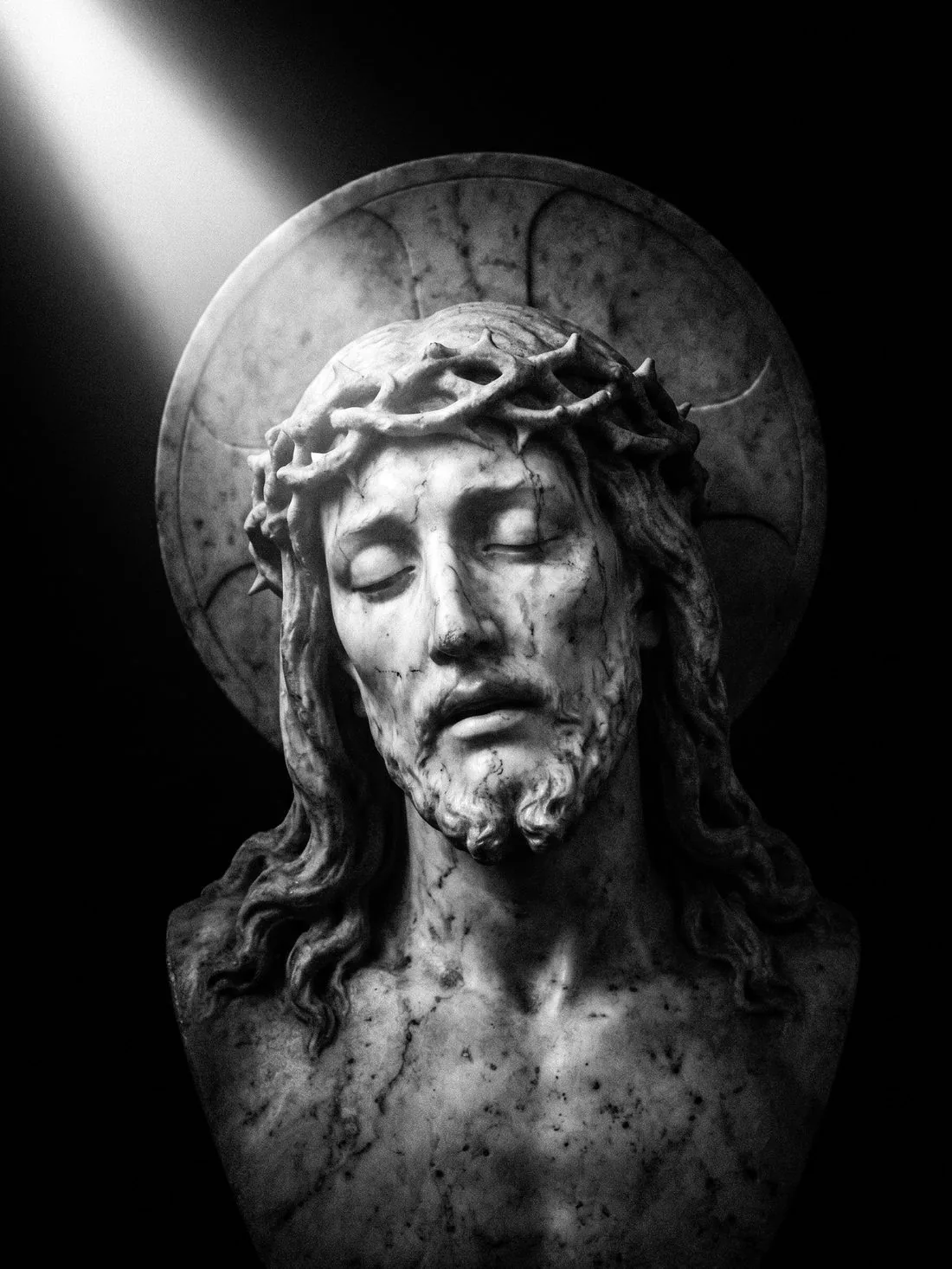
The Sacred Chant
Deus Magnus Est — "God is great." This is a sanctuary of Gregorian chant: sacred Latin plainchant raised to the glory of God. Here the ancient prayer of the Church is gathered into one unbroken stream of adoration — the Kyrie eleison, the Media Vita, the great hymns and litanies of the Church. Let the chant fill the silence.
Gregorian chant is the traditional sacred music of the Roman Catholic Church — unaccompanied, sung in Latin, named for Pope St. Gregory the Great. Its single line of melody was built not to perform but to pray, to carry the words of Scripture and the liturgy on the breath of the whole Church at once.
For prayer, meditation, and rest
Whether you come for prayer, for adoration before the Blessed Sacrament, for meditation, for study, or simply for stillness before the majesty of God, these voices serve the soul. Many keep the chant playing through work, through prayer, or through the quiet of night — a Gregorian chant for focus, for peace, and for sleep.
The militant tradition
Among these chants are austere Latin hymns and litanies in the manner of the medieval monasteries — solemn, grave and unhurried. They are heavy with authority, and they were meant to be.
The Tradition
What Is Gregorian Chant?
Gregorian chant is among the oldest music of the Western Church still sung today: a single, unaccompanied line of melody, sung in Latin, that has carried Christian prayer for more than a thousand years. It takes its name from Pope St. Gregory the Great, who according to tradition gathered and ordered the chants of the early Church at the close of the sixth century.
Unlike the music of the concert hall, chant was never written to be performed. It was written to be prayed. Its free, flowing rhythm follows the words of Scripture and the liturgy rather than a fixed beat, and its modal melodies — the ancient Church modes — give it that grave, weightless quality that seems to belong to no particular century. There is no harmony, no instrument, no soloist seeking attention: one voice, or many voices as one, lifted toward God.
The prayer of the whole Church
For centuries Gregorian chant was the sound of the Mass and of the Divine Office — the hours of prayer kept by monasteries through the day and the night. The Kyrie, the Gloria, the Sanctus, the psalms and antiphons and hymns: all were chanted. The Second Vatican Council taught that, other things being equal, it should be given "pride of place" in liturgical services, and it remains, even now, the truest musical voice of the Roman Rite.
Why it endures
People return to Gregorian chant because it does something little else can. It slows the breath and quiets the mind; it draws the soul out of noise and into stillness. Many listen to chant for prayer and meditation, for focus and study, or for rest at the end of the day. But beneath every use is the same reason it was first sung: to stand, small and silent, before the greatness of God.
How it is written
Chant has its own notation, older than the five-line staff: square black notes, called neumes, set on a staff of four lines, with a clef that marks where do or fa sits. A single note may stand alone; several may bind together over one syllable and carry it like a long breath. There are no bar lines measuring time — only small strokes that mark where the singers breathe.
Its melodies move within eight modes, each with its own final note and its own character — some bright and steady, some grave, some yearning. To learn to hear them is to learn the colours of prayer.
The Repertoire
The Chants
A few of the great chants of the tradition — and what they carry.
Kyrie eleison"Lord, have mercy"
The oldest cry of the Mass, kept in its original Greek amid the Latin. Threefold and unhurried, it is the soul's first word before God — not a request for things, but for mercy itself.
Read more →Media Vita in Morte Sumus"In the midst of life we are in death"
A solemn medieval antiphon that looks mortality full in the face and answers it with prayer. Few chants are heavier, or more honest.
Read more →Veni Creator Spiritus"Come, Creator Spirit"
The great hymn of invocation — sung at Pentecost, at ordinations, at the beginning of all things undertaken in God. A summoning of the very breath of God upon the world.
Read more →Salve Regina"Hail, Holy Queen"
The Marian antiphon that closes the day at Compline in its season, sung into the dark as the monastery falls silent. Tender where the others are severe — the Church turning, at nightfall, to its Mother.
Read more →Dies Iræ"Day of Wrath"
The sequence of the Last Judgment, trembling and immense. Here the chant does not soothe; it warns — the sound of a creature standing before the throne of the Almighty.
Read more →
Through the Year
- Rorate Caeli"Drop down dew, ye heavens"AdventThe Advent longing in a single cry from Isaiah: let the heavens rain down the Just One.
- Puer Natus Est"A Child is born to us"ChristmasThe Introit of Christmas Day — the government upon His shoulder, the joy held in restraint.
- Attende Domine"Hearken, O Lord"LentThe Lenten plea for mercy, returning again and again to the same humbled refrain.
- Pange Lingua"Sing, my tongue"Holy Thursday · Corpus ChristiSt. Thomas Aquinas's hymn to the mystery of the Body of Christ, closing in the Tantum ergo.
- Regina Caeli"Queen of Heaven, rejoice"EastertideThe Easter antiphon to Our Lady, each line ending in a bright Alleluia.
- Veni Sancte Spiritus"Come, Holy Spirit"PentecostThe Golden Sequence — a litany of the Spirit's gifts: light, rest, comfort, cleansing.
- Adoro Te Devote"I devoutly adore Thee"AdorationTraditionally St Thomas Aquinas’s: before the Blessed Sacrament, sight and touch and taste fail; faith alone holds.
- Ave Verum Corpus"Hail, true Body"AdorationA brief medieval hymn to the Body born of Mary and offered on the Cross.
- Ave Maris Stella"Hail, Star of the Sea"Feasts of Our LadyThe ancient Vespers hymn to Mary, the star by which the sailor steers home.
- Te Deum"We praise Thee, O God"ThanksgivingThe Church's great hymn of thanksgiving, sung at Matins on Sundays and feasts and in solemn thanksgiving.
All chants →
Ordo · A Way of Prayer
How to Pray with the Chant
You do not need to read music, or Latin, or to have prayed this way before. Only to stop.
- I
Make a place of stillness
Lower the light. Silence the phone. If you can, sit where you can see a crucifix, an icon, or simply the dark.
- II
Begin as the Hours begin
Make the Sign of the Cross and say the opening verse of every hour: Deus, in adiutorium meum intende. Domine, ad adiuvandum me festina. — O God, come to my assistance; O Lord, make haste to help me.
- III
Listen before you understand
Let the Latin pass over you the first time. The chant works on the breath and the heart before it reaches the mind. Read the English afterward.
- IV
Keep one line
Choose a single phrase — Kyrie eleison, Miserere nobis — and return to it each time the chant returns. One line, prayed truly, is enough.
- V
End in silence
When the voices stop, do not hurry away. Say the Gloria Patri, and stay one minute longer in the quiet that the chant leaves behind.
Quaestiones
On the Chant
What does "Deus Magnus Est" mean?
It is Latin for "God is great" — a confession of the greatness and omnipotence of God, and the heart of this site.
Is Gregorian chant Catholic?
Yes. Gregorian chant is the traditional sacred music of the Roman Catholic Church, sung in Latin and named for Pope St. Gregory the Great.
What is Gregorian chant used for?
Prayer, adoration, the Mass and Divine Office, meditation, study, and quiet rest. Many listen to pray, to focus, or to fall asleep in peace.
What chants are in the collection?
Latin plainchant in the tradition of the Church — the Kyrie, the Media Vita, hymns and litanies — sung as one unaccompanied line, in the austere manner of the medieval monasteries.
Is it free to listen?
Yes. Every chant streams here and on the channel at no cost.
Do I need to understand Latin to pray with the chant?
No. The chant was made to carry prayer, not to test scholarship. Listen first and let the sound do its work; the English stands beside the Latin whenever you want it.
Who was St. Gregory the Great?
Pope from 590 to 604 and a Doctor of the Church. Tradition credits him with gathering and ordering the chant; historians place the repertoire we now call Gregorian chiefly in the Frankish lands of the eighth and ninth centuries, where Roman chant was received and set down.
What is the difference between the chant and the anthems?
The chant is the Church's own liturgical song: one unaccompanied line in Latin. The anthems are modern orchestral and cinematic arrangements of sacred prayer, made for devotion rather than for the liturgy itself.
When is the Salve Regina sung?
Traditionally at Compline, from Trinity Sunday until Advent. Through the rest of the year three other Marian antiphons take its place: Alma Redemptoris Mater, Ave Regina Caelorum, and Regina Caeli.